
Black Friday
25% off every handcrafted piece
Traditional crafts, made by hand and turned into jewellery. For five days only, every piece is 25% off.
Prices shown already include the discount. Ends Friday 27 November, midnight UK time.

Your shopping bag is empty
Go to the shop
Handwoven kilim, framed in walnut
Kilim & Walnut
A pattern woven thread by thread.
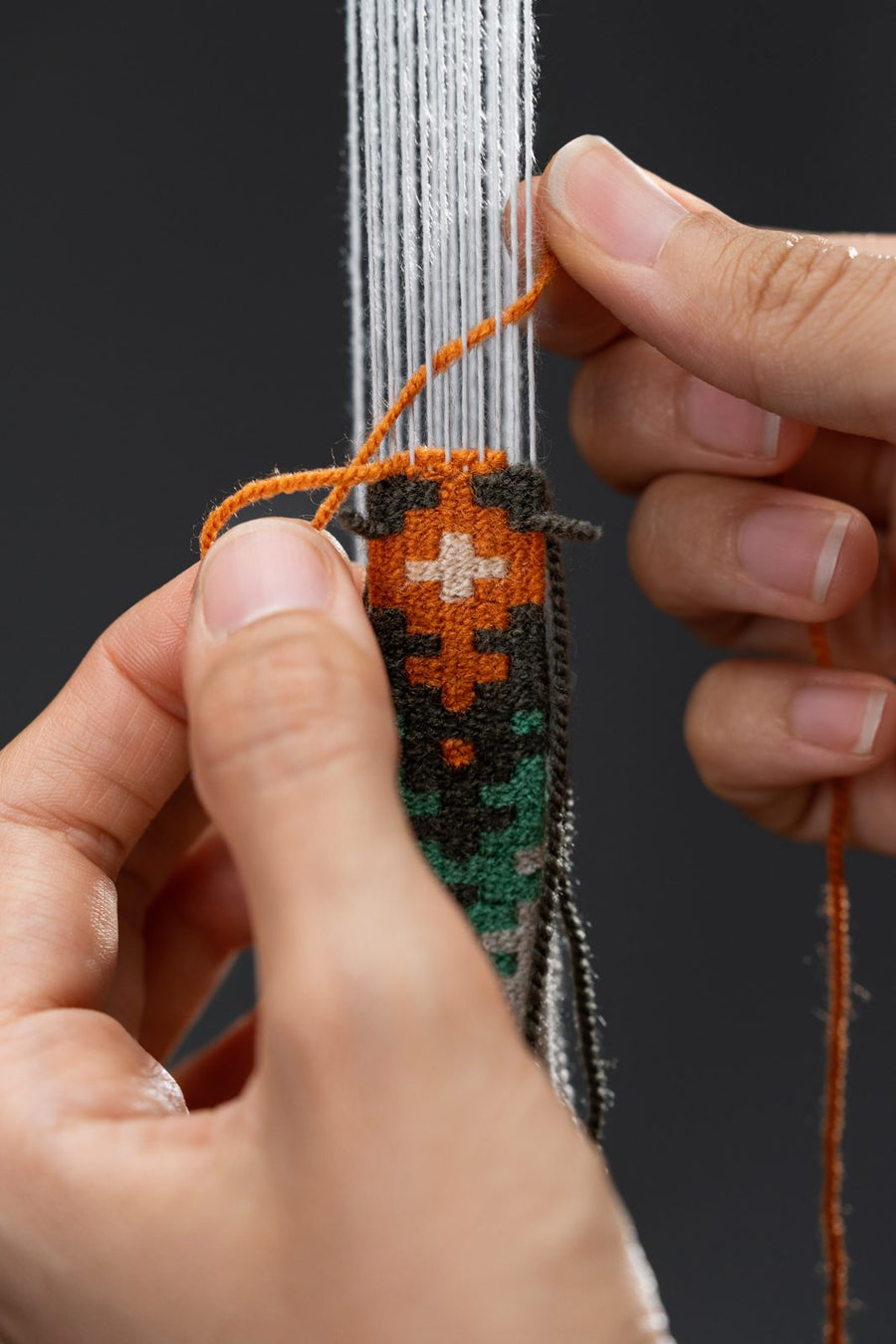
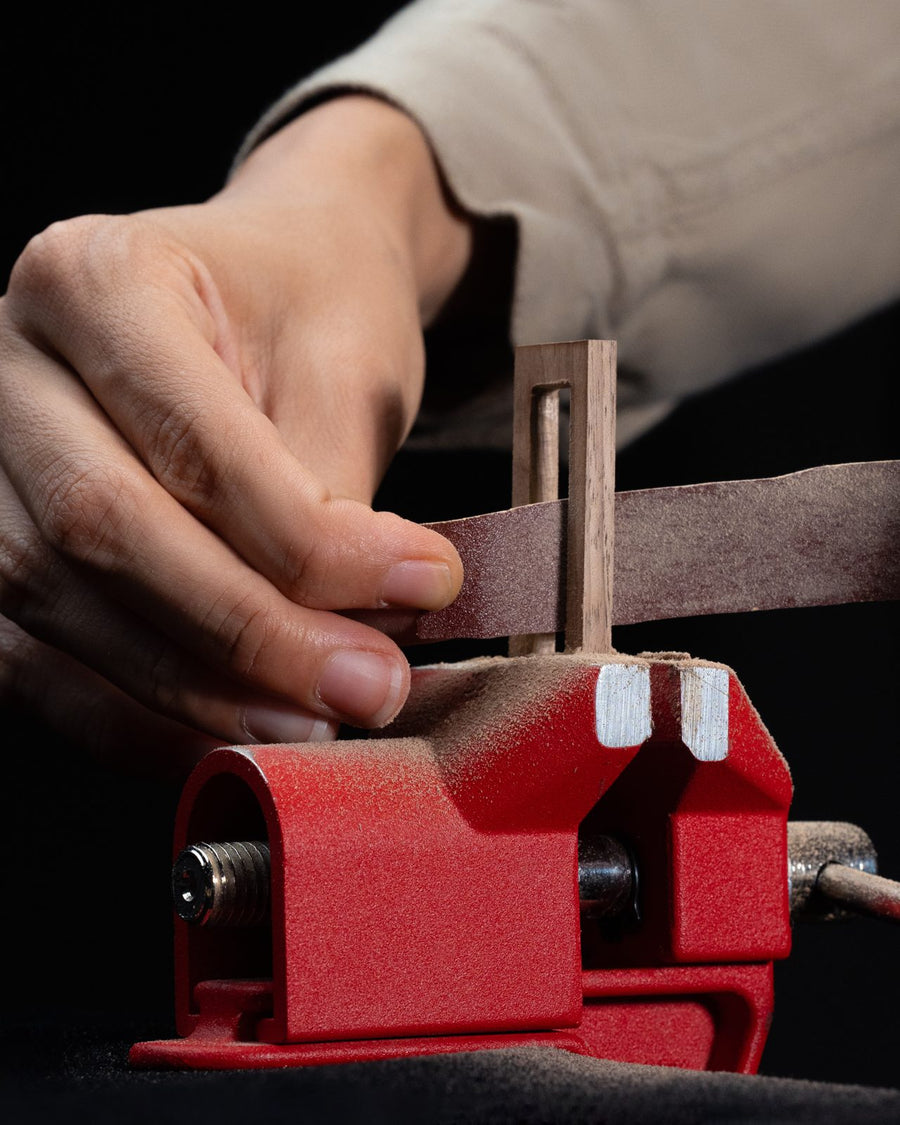
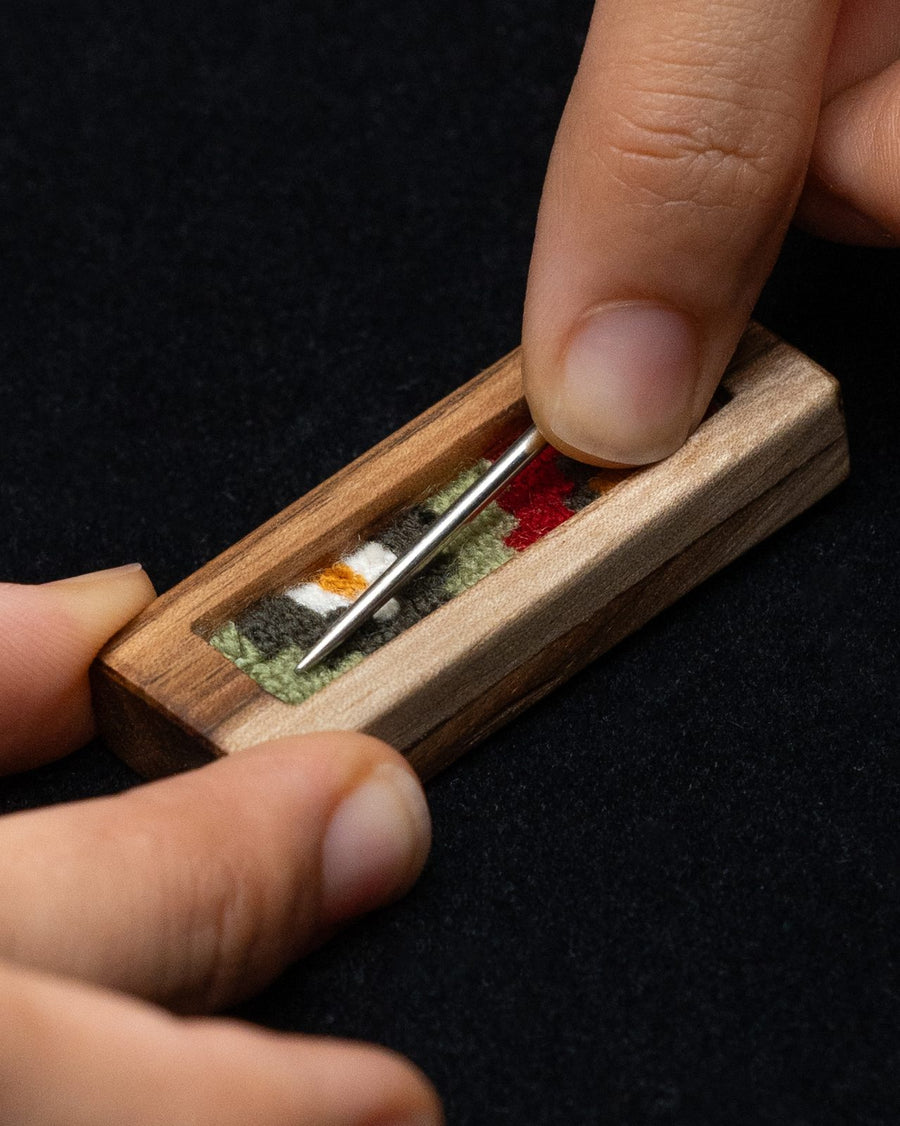
Kilim is one of the oldest ways of weaving: the pattern is not printed or stitched on, it is built into the cloth itself, one coloured thread at a time. We weave it in miniature on a small hand loom, then set each strip into a frame of walnut wood, cut and sanded by hand.
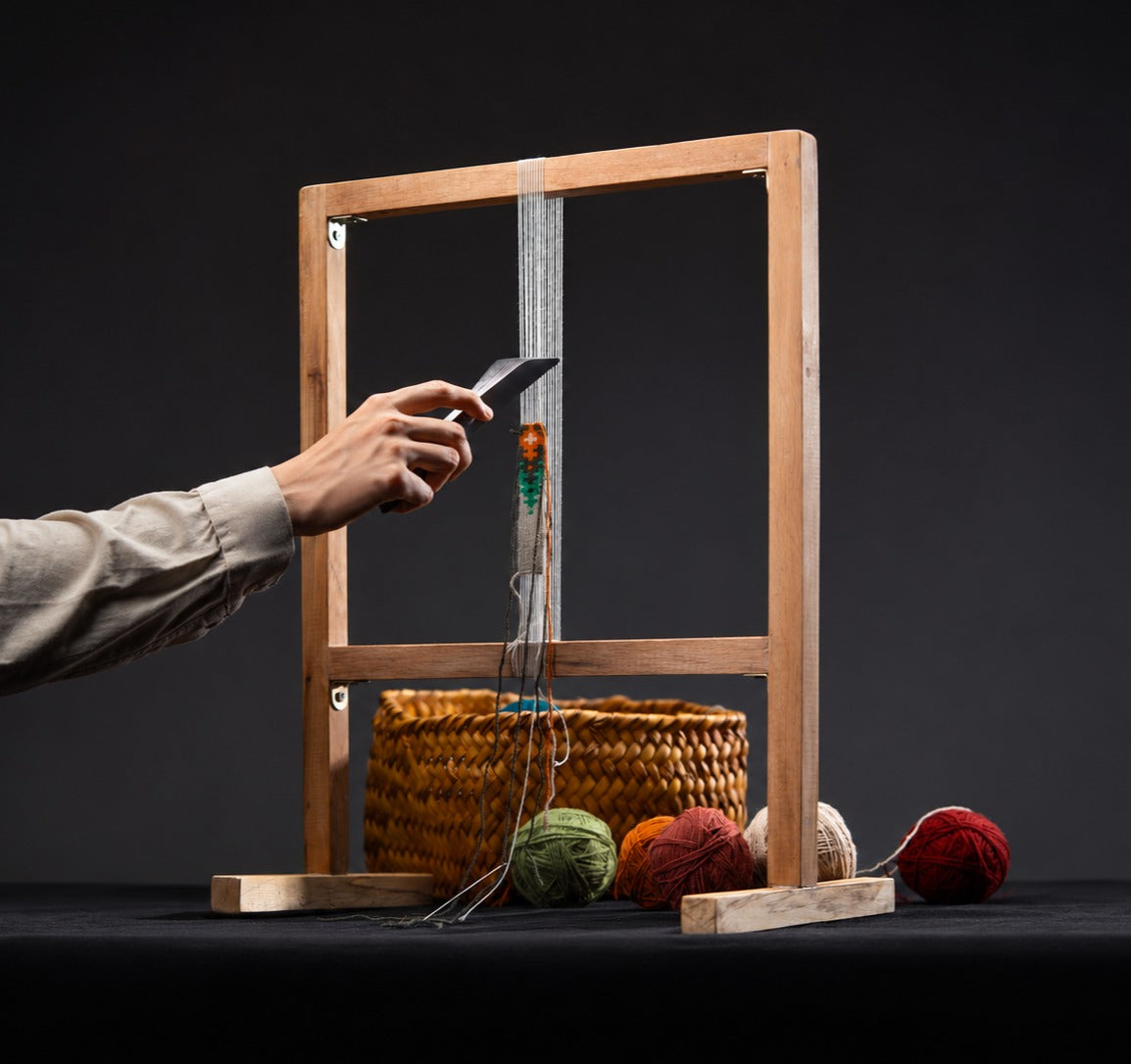
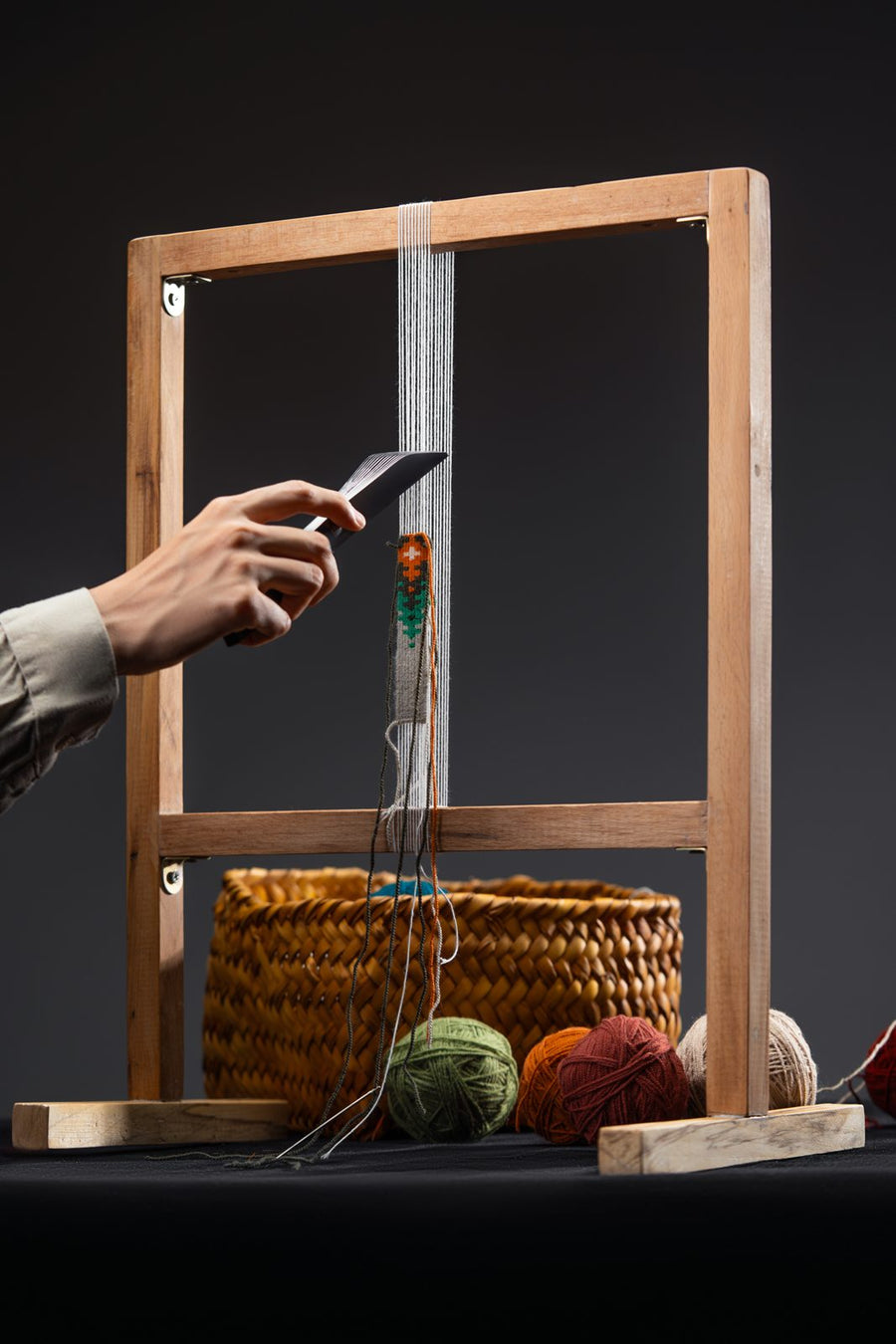
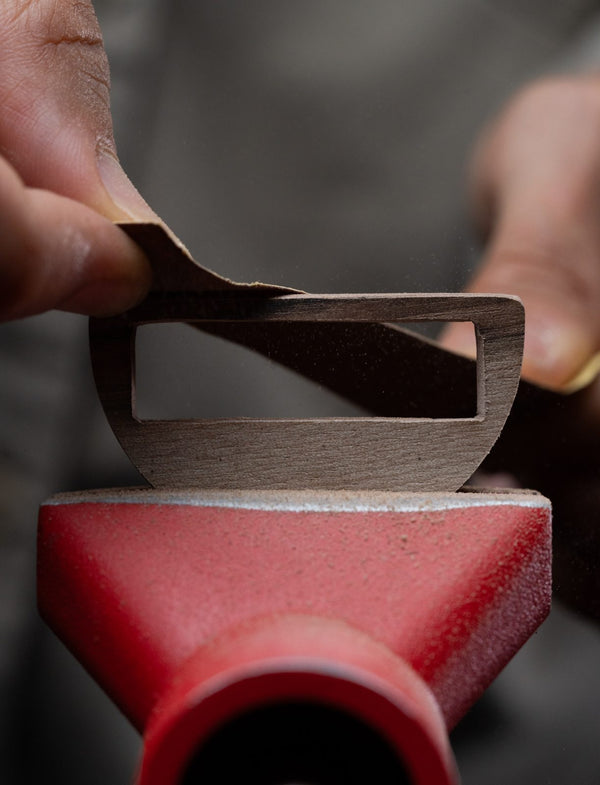
The weaving, and the walnut that frames it.
From sketch to jewellery
Two crafts meet in every piece: the weaving and the woodwork. Both are done by hand.


Look closer
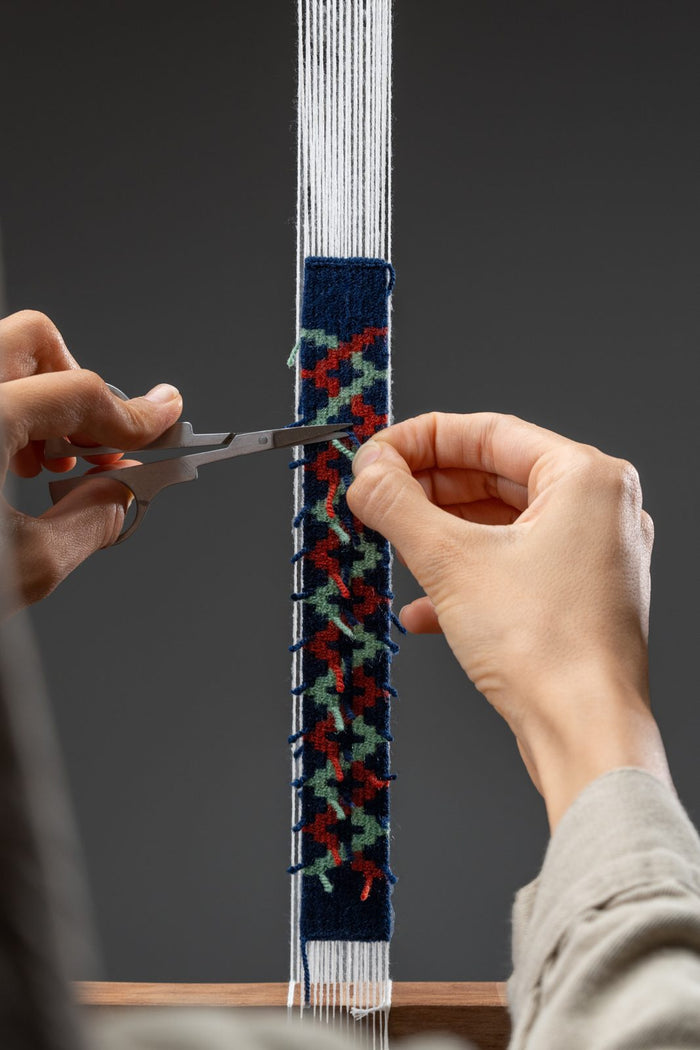
Every change of colour is a separate thread, woven in and trimmed by hand.
How it is woven


Craft story · Kilim & Walnut
Before it was an earring, it was a line.
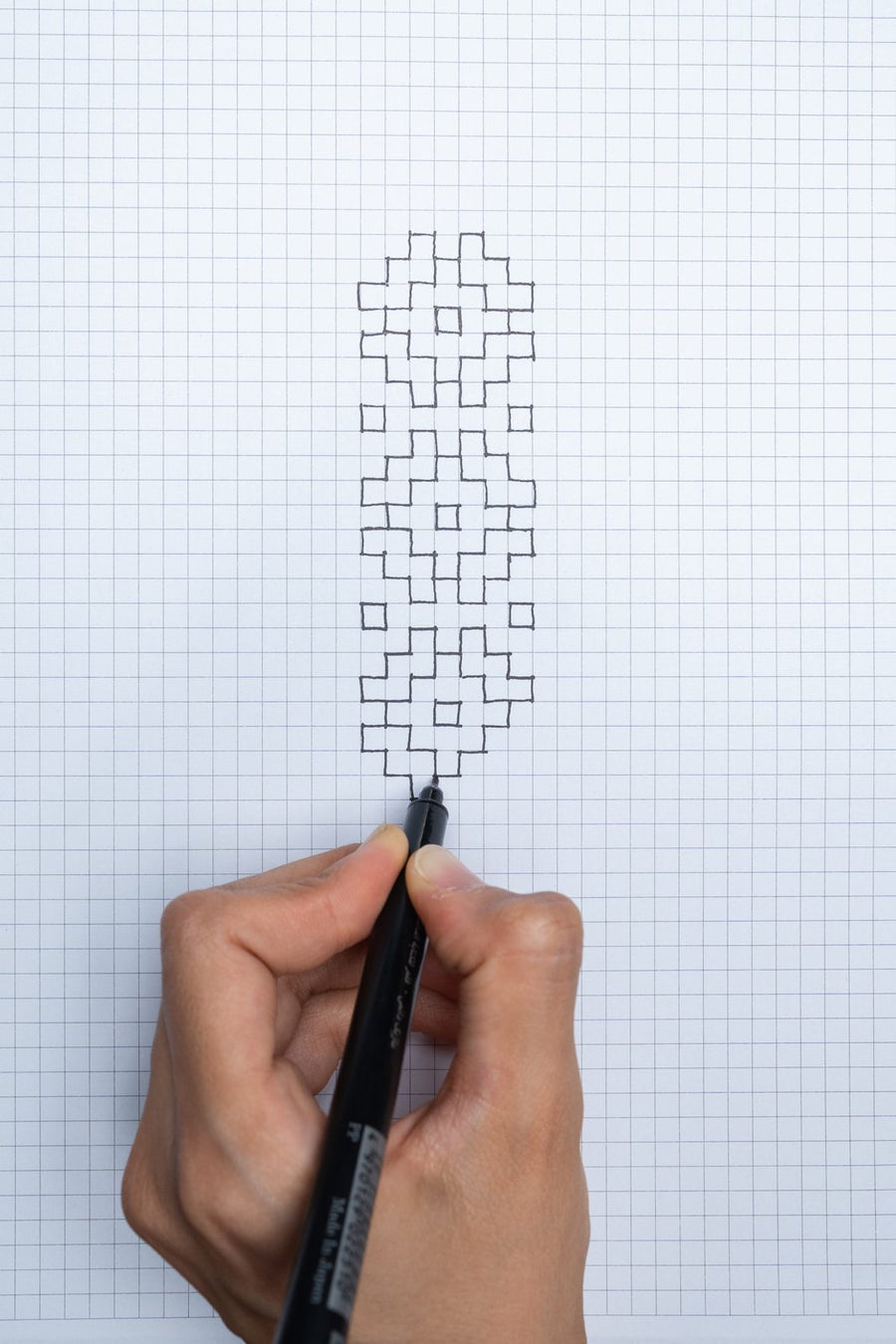
It begins on graph paper, with a pencil and a pattern older than any of us. Follow one piece of Kilim & Walnut jewellery from the first mark to your hands.
- The pencil goes down before the yarn does.
- First, the loom is dressed.
- Over, under, and press it down.
- Across the bench, a second craft.
- Two crafts, one object.
- The details nobody notices, until they do.
Good to know
Kilim jewellery: your questions answered
What kilim is, how it is woven and how it becomes the jewellery you wear.
What is a kilim?
A kilim is a flat-woven textile with no pile. Its pattern is made by weaving coloured threads over and under a set of plain threads, so the design is part of the cloth itself.
How is kilim jewellery made?
The pattern is drawn on squared paper, then woven by hand on a small loom. The finished strip is fitted into a walnut frame that has been cut and sanded by hand, and made into earrings, necklaces and bracelets.
What is the difference between a kilim and a carpet?
A carpet has a pile made of knots. A kilim is flat: the coloured threads are woven through the cloth, which gives its patterns their clean, stepped edges.
Why walnut wood?
Walnut is a warm, dark hardwood with a fine grain. It is light enough to wear and it frames the colours of the weave.
Is every piece handmade?
Yes. The kilim is woven by hand and each walnut frame is shaped by hand, so small differences make each piece slightly different from the next.
How do I care for kilim and walnut jewellery?
Keep it dry and away from perfume and lotions, and store it in its box. If it gathers dust, brush the weave gently with a soft, dry brush.

